Achieve Minimalism in Ink Art: Embracing Minimalist Ink Techniques
- 4 days ago
- 4 min read
Ink art has a unique way of capturing the essence of simplicity and depth all at once. When I first encountered minimalist ink art, I was drawn to its quiet power - the way a few strokes could evoke so much feeling. It’s a practice that invites us to slow down, to focus on the essentials, and to find beauty in restraint. If you’ve ever wondered how to achieve minimalism in ink art, you’re in the right place. Let’s explore how minimalist ink techniques can transform your creative journey.
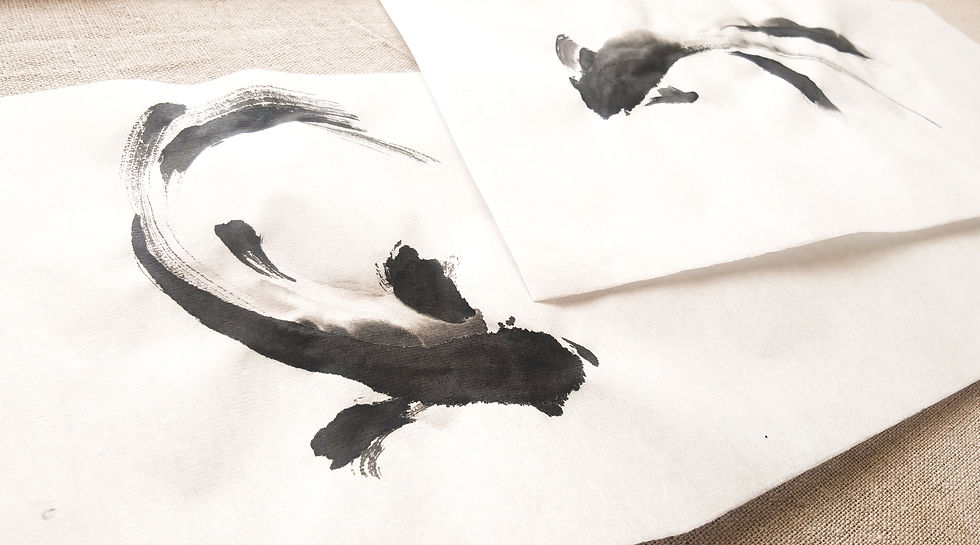
Discovering the Beauty of Minimalist Ink Techniques
Minimalism in ink art is not about doing less because you have to, but because every line, every dot, and every space matters. It’s about intentionality. When I work with ink, I remind myself that each stroke should carry meaning. This approach is deeply meditative and encourages mindfulness.
To start, consider the tools you use. A simple brush or pen, high-quality ink, and smooth paper are your best friends. The fewer distractions in your materials, the more your focus sharpens on the art itself. I often choose brushes with soft bristles that respond to the slightest pressure changes, allowing me to create delicate lines or bold marks effortlessly.
Here are some practical tips to embrace minimalist ink techniques:
Limit your palette: Stick to black ink or a single colour to maintain simplicity.
Use negative space wisely: The empty areas around your strokes are as important as the inked parts.
Practice controlled strokes: Each line should be deliberate, whether it’s thick or thin.
Embrace imperfection: Minimalism is not about perfection but authenticity.
By focusing on these elements, you’ll find your work becoming more expressive with less.

The Meditative Rhythm of Ink and Paper
Have you ever noticed how the act of drawing with ink can slow your thoughts? For me, the rhythm of dipping the brush, the sound of the nib on paper, and the flow of ink create a calming ritual. This is where minimalist ink art becomes more than just a visual practice - it becomes a form of meditation.
When I teach workshops, I encourage participants to focus on their breathing and the sensation of the brush moving across the paper. This mindfulness helps to quiet the mind and opens up space for creativity to flow naturally. The simplicity of minimalist ink techniques supports this process by removing the noise of complexity.
Try this exercise:
Choose a quiet space and sit comfortably.
Take a few deep breaths to centre yourself.
Dip your brush lightly into the ink.
Make a single stroke on the paper, focusing entirely on the movement.
Pause and breathe before making the next stroke.
Repeat this slowly, allowing your mind to settle with each mark. You’ll notice how the minimalism in your art mirrors the calmness within.
Exploring Traditional and Modern Influences
Minimalist ink art is a beautiful blend of tradition and innovation. The roots of this style lie in ancient Chinese calligraphy, where every stroke is a reflection of the artist’s spirit. I find it inspiring how these traditional techniques can be adapted to modern urban sketching, creating a fresh dialogue between past and present.
In my own practice, I often start with the principles of calligraphy - balance, flow, and simplicity - and then experiment with contemporary subjects like Portrait. This fusion allows me to express both the timeless and the immediate.
If you want to explore this blend, consider:
Studying basic calligraphy strokes to understand their energy.
Observing urban environments and capturing their essence with minimal lines.
Combining ink with light washes or textures to add subtle depth.
This approach keeps your work grounded in tradition while inviting personal expression.

Practical Steps to Start Your Minimalist Ink Art Journey
Starting minimalist ink art can feel daunting, but it’s really about embracing simplicity and patience. Here’s a step-by-step guide to help you begin:
Gather your materials: Choose a few essential tools - a brush or pen, black ink, and smooth paper.
Warm up with basic strokes: Practice lines, dots, and curves to get comfortable with your tools.
Focus on composition: Plan your piece with plenty of negative space. Think about where your strokes will breathe.
Create with intention: Each mark should have a purpose. Avoid overworking your piece.
Reflect and refine: Step back often to see your work as a whole. Adjust only if necessary.
Remember, minimalism is a journey, not a destination. It’s about learning to trust your instincts and appreciating the quiet power of simplicity.
If you want to dive deeper, I invite you to join my 6‑month Special Live Sessions—with regular live practice, personal feedback, and a calm space to deepen your ink practice over time.
Embracing Minimalism as a Way of Life
Minimalist ink art is more than a style - it’s a philosophy. It teaches us to appreciate the essentials, to find calm in simplicity, and to express ourselves with clarity. It also reminds us that in a limited lifetime, we won’t have time to do everything—but we can choose what matters most, stay focused on it, and make the most of it. For me, this practice has been healing and grounding. It reconnects me with the joy of hands-on creation and the present moment—and it also brings my attention to the limited time I have, encouraging me to choose wisely what I want to do, and to fully enjoy the moment while I’m doing it.
If you’re seeking a creative outlet that nurtures mindfulness and artistic expression, I invite you to explore my minimalist ink art practice. Whether through personal practice or joining a workshop, you’ll discover a unique way to slow down and connect with your inner self.
Why not pick up a brush today? Let the ink flow gently, and watch how minimalism opens up a world of meaning in every stroke.
I hope this reflection inspires you to embrace minimalist ink techniques in your own art. Remember, simplicity is not about less - it’s about more meaning, more presence, and more heart.